NOTE:

Dear visitor (if there is any) please note the following: The blog "Broken Radius" is hosted at Google Blogger's server. I can therefore not guarantee that your visit to the blog or any comment you write wont be recorded by the NSA. If you have any worries about this, you can visit instead my alternative blog Letters-to-a-Persian-Cat. This one is hosted at a European server which hopefully acknowledges visitors privacy.

18.3.17

Philosophy - The Next Generation

The term Philosophy - as we have all learned once in school - simply means "love of wisdom" (from the greek term φιλοσοφία). But wisdom is of course generated by people, and mostly it is also represented by living people. I don't want to argue again with some religious hypocrites which come up with the idea that there is something like a "devine wisdom".  There is no such a think, and wisdom only developed from the first human beings when they understood that by approaching a deer against the direction of the blowing wind, chances are higher that the animal won't recognice them.
Philosophy can be traced back at least to the 6th century BC in ancient Greek and probably early than that in India or China. But at a certain point it becomes vague as what should be categorized as Philosophy.
And it took till 1998 when suddenly the modern society re-thought of this "love of wisdom". In this year a user on the Livejournal blog invented the term Sapiosexual to describe not the love for wisdom, but the sexual attraction to a "wise" person. 
In 2014 the dating site OKCupid made the term even more popular by including it on their list of sexual preferences, to give their users a more precise option when searching for a partner.

People who self-identify as sapiosexuals, or those who say intelligence is the most important sexual trait, are having a moment. Critics of the movement say it's at best pretentious and at worst discriminatory.[from Steven Blum, Broadly]

This reminds me of the TV serie "Masters of Sex" , where the Dr. William Master, a medical researcher of rather unspectecular physical features, unwillingly attracts the attention of his enchanting lab technician Virginia Johnson. Despite working in a hospital environment with plenty of handsom, well-build and self-confident men, Ms. Johnson becomes hopelessly devoted to Dr. Masters, who lives mainly in his world of diagrams, statistics and weired instruments that shall kick out all mystics from human love. 

But it is not the very subject of Bill Masters work, that made him so irresistable for Mrs. Johnson, but it is his very character. He could probably study the morphology of cactus thorns or the frequency of thunderstorms with the same devotion as he did his sex-studies, and still would attract some girl as Ms. Johnson. Sapiosexuality, as represented by her in this TV Serie, is perhaps a rather new classifier in the field of reseach because it is a non-exclusive term. This means that one can be highly attracted by an intelligent person, and at the same time be gay, hetero, lesbian, SM etc. But others aren’t so convinced and argue that being attracted to intelligence doesn’t qualifiy as a sexual orientation, and that by self-labeling as sapiosexual one is simply discriminating other person based on their class, educational record or their abilities.

 Steven Blum writes in Broadly: Put simply, a sapiosexual is someone who finds intelligence to be the most important sexual trait— the kind of person who quotes Sylvia Plath in bed or, on the other end of the spectrum, argues about microeconomics on a first date. The term was allegedly coined by a top-hatted LiveJournal user named wolfieboy, "while on too little sleep driving up from SF in the summer of '98." But since its inclusion by OkCupid, the identity has gone mainstream: This past month, Merriam Webster announced it was debating whether or not to include it in the next edition of their dictionary. Meanwhile, a new dating app called Sapio would like to help you shoo away potential suitors who can't quote Sartre on command.

Whatever the intention, though, the label has certainly stuck. On OKCupid, 9,000 users identify as sapiosexual. The sexual "identity" also boasts a Facebook page and numerous photos on Tumblr that seem to link sexual and intellectual pleasure — one image hashtagged "sapiosexual" shows a brain being fingerbanged; another depicts a man reading a book while doing it doggy style. Other users post quotes like, "It's beautiful when you find someone that wants to undress your conscience and make love to your thoughts."
Expanding the spectrum of sexual orientations to include sapiosexuality might make those who cream their pants while reading dissenting opinions from Ruth Bader Ginsberg or the latest N+1 feel affirmed, but desiring smart partners isn't a unique or non-normative preference. According to Lora Adair, a professor of evolutionary psychology at Lyon College, men and women have always craved intelligence in mates, whether they go out of their way to identify as a sapiosexual or not.
"When it comes to identifying traits we perceive as 'necessities' when searching for long-term mates, men and women of varying sexual orientations tend to put intelligence and kindness above other sexually attractive attributes, such as physical attractiveness," Adair said.
This is true across species, although in non-human animals, "intelligence," or cognitive ability, is "measured morphologically," she said.
"Take the male bowerbird, which constructs elaborate 'homes' adorned with brightly colored, scarce objects from their environments to attract 'choosy' females," Adair said. "The ability to find these scarce objects, and protect against the theft or sabotage of other males may serve as indicators of cognitive ability, and overall genetic fitness."
Adair believes the rise of sapiosexuality can at least partially be explained by the blurring of lines between "nerd culture" and the mainstream. "What were once fringe interests reserved for the stereotypically introverted, intellectual, 'nerds' of the world— comic books, characters, and comic-inspired films and TV shows, Sci-Fi and fantasy like The Star Trek reboots and Game of Thrones—are now essential features of 21st century American culture," she says.

But the identity has also provoked a backlash among those who see it as a way to discriminate against potential suitors based on ability and class. As one Tumblr user put it,"Sapiosexuality/romanticism is a bunch of ableist bullshit[.] You're not attracted to intelligence[,] you're repulsed by disability."

 Others see the label as limiting the conversation around intelligence. In a Buzzfeed quiz titled "Are You Actually A Sapiosexual," one of the questions literally asks readers whether they're "repulsed by the idea of having sex with someone who had never gone to college, or had no interest in higher education," seemingly normalizing the idea that it's okay to discriminate against those who don't have college degrees or explicitly academic aspirations.

This is reductive for obvious classist reasons but also because intelligence comes in various forms; furthermore, discriminating against suitors because they didn't spend four years accumulating debt isn't an identity or a sexual orientation, it's a limiting preference deserving of scrutiny.
The bias also doesn't need to be codified because it is innate. At one point, intelligence was a quality that "helped our ancestors in their forging of social bonds and alliances, their abilities to forage for food, shelter and safety, as well as their abilities to use tools or solve problems in ancestral environments," according to Adair, and it is something we still read as incurring short term benefits, like higher earning potential, and long term benefits, including more genetically "fit" offspring.
Taking this natural bias and making it your dating identity is superfluous. And, of course, it arguably makes you look like a pretentious asshat.


22.8.16

Camille Paglia on the Tim Hunt dispute

TIm Hunt has achieved great merrits for the discovery of cell cycle regulating proteins. This was an enormous contribution to understand embryonal development and malignant diseases, and was acknowledged with a nobel award to him and two other scientists some years ago. In 2015, however, all of Tims achievements were judged dispensible by the UCL London in view of a few political non-correct remarks he did about girls in science.

I have to ask Camille Paglia about her opinion on this case.

17.8.16

Asynchrony

When parts of a larger system seem to follow their individual time. This can confuse a human being totally, since we got used to experience time as an absolute parameter. We can easily imagine that for instance different temperatures occure (like in the kitchen it is hotter near the oven than near the sink). But we simply can not imagine that time runs faster near the oven than near the sink. Imagine that the water drops from the tap falling down the sink much slower (like in slow motion) than the drops of water that fall of the tea pot. Sometimes such effects are exploited in computer-generated movies, such as "Inception", but also in TV commercials. Than one sees the main actor moving around in an environment where time is frozen to a single moment. One is reminded of brother Grimms fairy-tale "Sleeping Beauty", when the prince enters the hidden castle and sees everything has fallen in a hundred years lasting sleep. Not only all people and animals are sleeping, but even the flames of the kitchen fire have stoped instantly and seem to be frozen. 

Whereas it is not so easy for us to fully understand the concept of physical relavity as discovered by Albert Einstein, it is easy to manipulate images or video sequences such a way that separate objects follow their own time schedule.

The image below, for instance, is composed of two photos.  The moon has been captured already 3 years ago, whereas the meteor (part of the Perseides shower) has been captures recently.


Read more books, live a longer life

Reading good books enriches our lifes. We can share experiences of others, sometimes romantic, sometimes painful, and by spending a few days to read a novel we can jump in other times, in another society and in another personality. Reading books is really a good investment of the short time that is given us in life.
But now a new study from Yale University shows that we not only gain knowledge and wisdom from reading fiction books, but that it can directly extend our physical life time. 
The study, which is published in the September issue of the journal Social Science & Medicine, looked at the reading patterns of 3,635 people who were 50 or older. On average, book readers were found to live for almost two years longer than non-readers. “When readers were compared to non-readers at 80% mortality (the time it takes 20% of a group to die), non-book readers lived 85 months (7.08 years), whereas book readers lived 108 months (9.00 years) after baseline,” write the researchers. “Thus, reading books provided a 23-month survival advantage.”
The paper also specifically links the reading of books, rather than periodicals, to a longer life. “We found that reading books provided a greater benefit than reading newspapers or magazines. We uncovered that this effect is likely because books engage the reader’s mind more – providing more cognitive benefit, and therefore increasing the lifespan,” the authors concluded.

Although I like the result of this study a lot, and I intuitively strongly believe in their conclusion, from a methodological point of view it suffers from the same shortcomings as many other retrospective social studies. The studies usually analyse questionaires they receive from randomly picked individuals. No doubt, analysing 3, 635 peoples health status and their reading behaviour is a vast amount of work and an association found between the reading habits and health status will be significantly and reproducible. 
But what remains to be shown is the causality. I.e. can I increase my life expectancy (or this of my children) if I or if we force ourself to read more books ?  And this is not clear, and the Yale study also has no answer to this. In epidemiology there is this well-known phenomenon of "reverse causation", which in the current studies could also underly the reported association. If one assume that any genetic or epigenetic factor (or a combination of those) improves a persons health status in general (including mental health, but also neuro-sensory fitness such as eye vision), this will independently lead to an incraesed longevity but at the same time also to a higher prefenrence to enrich ones life by reading good books. So these two outcomes of a questionaire, health status/life expectancy and frequency of reading books will automaticly be linked, cause they are influenced strongly by the same underlying inherent factors (genetic composition and epigenetic praegung). So they are clearly linked to each other, but not causing each other. 
The only solid prove of a causation of book reading and longevity would be a so-called randomized study (as they are state-of-the-art in clinical trials to test the therapeutic effect of new drug or method). Here, a large number of volunteers have to be recruited, and they assigned to a control and a test group randomly. And these two groups have to follow a defined protocol, whether they liek it or not. The control group should not read books (even if some group members are real book freaks), whereas the members of the test group all should read a defined minimal numbers of books (per month) whether they like books or not. And this study has to be followed over years or decades, of course. One could then do a simple non-parametric test (like Man-Whitney or Wilcoxon) for the attained age at death and could easily found if an intentional increase in book reading helps to extend life span. 
I am happy to notice that for me this problem does not exist, since I like to read books quite naturally. Assuming that I am not hampered by other life-shortening factors (such as working as a roof-layer or on a oil-platform or smoking or drinking extensively) I know that I fell in the group of 23 month longer than average live span, whether it is caused by my love to read books or by another congenital factor.
Twenty-three month is really a lot, sondiering that I have already gained 19 extra month by living with our dog Ivo, another 37 month by having a higher education, and another 16 month by living in a stable partnership. Whow, so much extra time, I have to think of how to spend it useful. 
I first will read more books, I think.  I have recently discovered Gaito Gasdanov, a contemporary writer of Vladimir Nabokov with a great classical writing style. I bought for the coming holiday season:
"The Return of the Buddha "

11.8.16

The 2016 Perseides Meteor Shower

Don"t know were you spend the evening tonight, but I"d like to remind you of the Perseides Meteor Shower that is most prominent these days. I think to watch them is also a good remedy for the sadness that one usually gets before beloved people leave.
Every 12 years, the constellation of earth and jupiter is such that the orbital trace of the perseides is slightly diffracted towards the earth, and therefore further increasing the frequency of meteors that appear as bright tracks on the night sky.
perseiden
Since the next two days might be quite cloudy, I think tonight is the only chance to view the fallen stars (nice term, isn"t it. Maybe we can see fallen stars like Whitney Houston, Britney Spears or Mikey Rourke tonight, or Michael Schumacher, Maradonna and the like).
To be honest, a real Meteor is much nicer than these celebrities that greet us every day from the yellow-press.
To help you find the Perseides and have a good chance to spot some of the meteors, I made a scheme for you to get an orientation on the night sky.


First try to find the north-eastern direction . Then turn your head further to the right, untill you see somewhere a very prominent constellation of stars called Cassiopeia (like a hughe W on the sky). Below or slightly left of Cassiopeia (depending at what time at night you are there) there is the constellation called Perseus, and the Stjaernfallen should originate from this site.
As I told you, according to mythology, you can express a wish whenever you see a Stjaernfallen, but you should not tell anybody about it.

15.7.16

I almost died the inevitable office death

Yesterday evening I left my desk in the institute at about 7:30 pm. The last our I spend thinking of how to design an experiment to reduced the risk of mutations from cosmic rays. I thought I am pretty safe in the office from anything falling down, being it cosmic debris or terrestrial objects. On the left side you can see me still in a pretty relaxing mute. When I opened my office today at 8 am, however I was slightly speaking a bit confused. I only saw pictures like this one (below) in news reporting from sites of earthquakes. But there wasn't any earthquake in Munich since about 3 million years. It appeared, instead that 4 book shelfes (each weighting about 80 kg) came suddenly of the wall at night (they had been fixed there by our campus facility group by drilling some holes in the plaster-board). The occupational safety officer came around right away to document the event. He assure me that if I would have been sitting at my desk in the moment of the event, I could have been dead (I guess it would have been the first case in history that somebody had been beated to death by falling books).
When I removed all the debries I discovered that the computer had also been damaged, at least it lost power connection when the heavy bookshelf crashed on it (white large box). On its temp-file time stamp I could retriev the time point when the accident happend. It was exactly 11 minutes after I left the institute. So a few minutes later, maybe another 15 minutes more thinking in a relaxed position about the risk of cosmic debris, and I would have fallen on the office field of honour.


4.7.16

The crazy world of Venn diagrams

Venn diagrams are tools to summarize in a graphical manner the results of a multifactorial analysis. Outside proper number theory in mathematics, however, they are usually more confusing than elucidating. Actually, I hate them, because people in life-science use them mainly to show how much work they did (but not how much intelligent thoughts they invested).


Here I'd like to suggest (and of course claim trademark ownership for) a couple of special cases of Venn diagrams


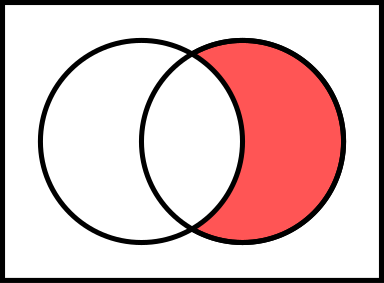
The Solar Eclipse diagram
(2 sets with 1 shared set)


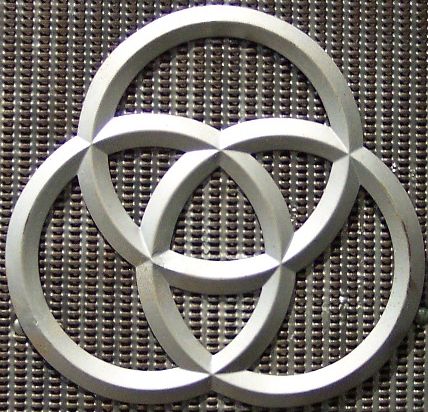
https://upload.wikimedia.org/wikipedia/commons/e/ed/Drei_Ringe_von_Krupp.jpg


The Krupp diagram
(3 sets with 3 shared sets in pairs and 1 shared set for all)


Image result for audi ringe

The Audi diagram
(4 sets with 3 pairwise shared sets)


Image result for olympische ringe

The Olympic diagram
5 main set
7 pairwise shared sets in the overlap between
       -  blue-yellow
       -  blue-black
       -  black-yellow
 -  green-yellow
                                                                   -  green-black
                                                                   -  green-red
                                                                   -  red-black
                                                    3 subsets shared by 3 sets in the overlap between                                                                                           -  blue-black-yellow
                                                           -  green-black-yellow
                                                           -  green-black-red 
 

3.7.16

Scientists wellcome culture

You might call this scientific brain drain, but I rather consider it the competition of the brightest brains for the best possible places in the world to do research. I do every year a two-weeks summer school on "Molecular Mechanisms of Radiation Carcinogenesis", which over the last ten years or so attracted more and more students from all over the world. This years class had participants from China, India, Iran, Turkey, Romania, Serbia, Sweden, Germany, Nigeria, Ghana and the US (please note I listed the countries in the order of the rising sun, i.e. from the farest east to the farest west).

Young scientists from various countries attented the 2016 CONCERT summer school on "Molecular Mechanisms of Radation Carcingenesis" in my instiute. I am sure that the unrestricted spreading of science will promote new discoveries, maybe one of them even help me to reverse my grey hair (4th from left).


I have to say that they were all extremely commited to the lectures they heared here, and since they returned to they home institutions or continue their PhD projects anywhere else, it is not a brain drain from the poorer to the richer hemisphere of the world, but rather the spreading of scientific knowledge.
I strongly believe that anything that mankind has discovered or created should be available for no costs to everyone, because only this way this and all future generations can profit from scientific discoveries. But I not only want to advocate a world-wide benefit from the discoveries of a few brilliant researchers (such as Harald zur Hausen or Emmanuelle Charpentier), but I strongly believe that an unlimitted access to the creative pool of the whole world will speed up and nourish any further progress, be it scientifically, technical or cultural.

24.5.16

The Universe according to Fatemeh with Zodiacs of International Cinema


The International Movie Festval in Cannes had just announced the winners of the Golden Palm Award. Some are questionable (like Ken Loach for I, Daniel Blake), some are missing (like Maren Ades Toni Erdmann), and some are well chosen (like Asghar Farhadi for The Salesman featuring Shahab Hosseini).
It seems that the Jury in Cannes is more concerned with honouring the usual suspects rather than identifying novel talents. One of them, I hope, is Fatemeh E., who is currently studying cinematography in Iran. The apple she holds in her hands carries new zodiacs of famous movies of the past. 
The apples skin is boundless, but finite, like the universe. And it has the red appearance of all very-far objects, the wavelength of which become longer due to the universe expansion (red-shift)

7.5.16

Wise words at the wrong moment

Pope Francis was awarded the presticious Charles-Le-Magne Prize yesterday. To my knowledge it is the first time that a non-European is honoured with this prize, that "is directed at a voluntary union of the European peoples without constraint, so that in their newfound strength they may defend the highest earthly goods - freedom, humanity and peace - and safeguard the future of their children and children's children."
 In his speech of gratitude the Pope hailed the previous generation, who had laid the “foundations for a bastion of peace, an edifice made up of states united not by force but by free commitment to the common good”. “Their new and exciting desire to create unity seems to be fading. We, the heirs of their dream, are tempted to yield to our own selfish interests and to consider putting up fences here and there,” he said.

Wise words of a wise man, and there is hardly anything one could add. But I ask myself if the Pope was well advised to make this powerful pro-European statement right now, only six weeks before the UK referendum about their EU membership. Receiving warm words of support from the wrong allie might do more bad than good, and the pro-European faction in the UK is in bad need of reaching the hearts and souls of their British voters. Francis might be the wisest and the most courageous Pope since a long time, but still: He is the Pope. And when it comes to British souvereignity, being a catholic is perhaps worse than being a German. The British might have discovered some sympathy for Angela Merkel, but for catholic church they will never. So Pope Francis fine and courageous words might have added to his record of brilliant political statements, but if he would have waited 6 more weeks with it, until the UK referendum is over, he might have served the European idea better.

As the British say that the secret of a good joke is mainly timing. It might be that the secret of an influential political speech is also timing.